Current research guidelines suggest that academics gathering data on Range of Motion (ROM) may allow for up to 10 degrees “margin of error” when measuring ROM using traditional tools. Our 3D Joint ROMtool takes data gathering to a whole new level with highly accurate ROM measurement in all 3 planes simultaneously.
We expect this to become increasingly important in the clinical environment as one of the global trends emerging in healthcare is that therapists are moving toward outcomes-based or evidence-based therapy. Subjective analysis is coming under pressure from patients who expect to be able to see a measured, objective outcome to their therapy.
The 3D Joint ROM tool provides an easy to implement tool for demonstrating improvement of ROM in real-time.
While there are a number of tools available to clinicians to measure Range of Motion (ROM), one of the key benefits recognised by academics and researchers using 3D Joint ROM, is the ability to access, store and manipulate raw data from our sensors.
The tool is currently in use by PhD and Masters students in the fields of physiotherapy and biomechanics who are using it for research and data gathering.
Data can be exported in a variety of different formats, allowing researchers the ability to manipulate and manage the data to fit their research requirements.
If you talk to South Africans, they will proudly tell you that we are a sporting nation. The facts however suggest otherwise.
According to the World Health Organisation, up to 40% of South Africans don’t do the minimum recommended daily dose of physical activity
Recently Discovery CEO Adrian Gore posted an article talking about how lack of activity was leading to a spike in health related issues including diabetes, heart disease and cancer.
Gore makes the point that physical inactivity makes up 6% of global deaths and costs billions more in general healthcare treatment.
Since launching Dynamic Body Technology, we have done a couple of talksaround the importance of movement and we do something a little bit different: We do a Range of Motion (ROM) test on employee necks and you’ll be surprised at how little mobility many people have. This is often as a result of poor posture at their desks, “head-down” position over a cellphone or a telephone tucked between ear and shoulder.
When you show them – in real-time – the range they should be reaching, it hits home the physical impact that work is having on them.
Just the other day, we were in a small business talking about movement and the [supposedly young and healthy] 28 year old receptionist did a quick ROM test on her neck. By 2pm in the afternoon she was suffering from shoulder pain and had very limited ROM on her right hand side because of the way she cradled the phone between her shoulder and neck.
Once we had started the discussion about the importance of movement, the finance executive at the business joined the conversation saying that he had effectively checked himself off for a week because of shoulder immobility that meant he couldn’t use a computer. Ultimately a physiotherapist was able to put him on a treatment regime to improve mobility but it’s another simple example of lost productivity through inactivity and poor office posture.
The scary thing is that inactivity is becoming a bigger and bigger issue from a younger age.
The Australian Physio Association recently pointed out that 80% of Australian children between the ages of 5 and 17 do not meet the minimum physical activity recommendations which is 60 minutes a day.
Bearing in mind that Australia also positions itself as a “healthy” and “sporting” nation, that is a telling statistic. Throw in the prevalence of mobile devices and the long-term impact this has on neck and hand / wrist joints and you start to realise that we need to tackle this issue of inactivity.
The economy is struggling so employees are being forced to work longer and harder to try and keep productivity levels are high. This is having a material impact on their health and wellbeing and what is being dismissed as short-term pain is in reality a precursor to long-term health issues such as cancer.
If you would like our team to come and talk to your staff and do some Range of Motion (ROM) testing, you can pop me a mail on marca@3djointrom.com
In this, the final episode of 2018, the team talked to researcher, lecturer and private practitioner Helen Banwell about the symptomtic Vs asymptomatic flatfoot in children (and discussed when to ‘treat’ Vs when not to), the possible importance of asking about family history, conservative Vs surgical management, dealing with worried and anxious parents and orthoses prescription habits for the younger patient.
Since forming our business, we have been passionate about encouraging healthcare professionals to embrace technology as a way of doing more [and better] business. When we ran our original “Practice of The Future” event earlier in the year, we were surprised at the reluctance of healthcare professionals to embrace technology.
From time to time, we identify learning materials which can assist clinicians to use technology to better engage their clients.
In this podcast, Dr. Sebastian Gonzales explains how he used tools like YouTube to grow his practice.
Gonzales covers:
How to discover your audience
How to create for your audience
What mental barriers you’ll need to overcome as you create
We have consistently argued that the implementation of the National Health Insurance (NHI) system in South Africa is a defining piece of legislature which has the opportunity to make an enormous difference in the lives of ordinary South Africans, particularly those who cannot afford private medical care.
Having said that, we believe that the decisions being taken are not informed by real-world data or analytics and could end in a costly situation for South Africans across the spectrum.
To that end, we share the press statement issued earlier today from various civil society bodies:
MEDIA STATEMENT: National Health Insurance Bill – STOP THE RUSH
Date: 27 November 2018
CIVIL SOCIETY ORGANISATIONS CALL FOR PROPER CONSIDERATION OF PUBLIC COMMENTS ON NHI BILL – STOP THE RUSH
What started as a marathon has turned into a sprint. After over a decade of policy documents, each iteration being further denuded of detail and meaning, and with little apparent attention to legitimate comments and concerns, the National Health Insurance Bill looks likely to be rushed through the legislative process following its hasty presentation to Cabinet tomorrow.
The draft NHI Bill was finally published for comment in June 2018 with interested parties (everyone in South Africa) being given only three months to make submissions. Requests for extension by TAC, SECTION27, RHAP, PHM and others to allow for proper consultation were ignored. Further requests by SECTION27 for transparency about the number and type of comments made have also been ignored.
Just two weeks after the final date for submissions (21 September 2018), a version of the Bill amended by presidential advisor Dr Olive Shisana without the knowledge of the Director General of Health and without consultation with the Minister of Finance was leaked, together with a letter from Treasury complaining about this change in direction. This version, prepared so soon after the submission deadline, cannot have taken into account the likely hundreds of submissions made by interested parties across the country. It was also, interestingly, prepared before the Presidential Health Summit of 19 and 20 October 2018, at which delegates made clear the need to focus on system improvement aimed at fixing the crisis in public health rather than on legislation.
Now we understand that the Bill will be presented to Cabinet tomorrow for approval – the final step before it is presented to the legislature. The legislative development process has been removed from the office of the Director General, who bravely spoke out last week about being side-lined by the presidency and her subordinates. We also understand that the Bill has not been discussed in the National Health Council – the body established by section 23 of the National Health Act 61 of 2003 to advise the Minister of Health on policy and on proposed health legislation (before it is introduced to the legislature).
Having ostensibly provided so many opportunities for comment, the comments made over the past decade do not appear to have been taken into account, either between the Green and White Papers and the Bill or after the draft Bill was published for public comment. This makes a mockery of public consultation as required by the Constitution and opens the Bill up to future attack and delay on these grounds.
Pro-poor civil society organisations and healthcare professionals have consistently argued that government needs to focus on fixing the crises in private and public health rather than on hastily passing legislation that, in its current state, takes the country in the wrong direction.
In other countries where national health insurance schemes have been implemented without proper reflection, including in Ghana and Colombia, the schemes and the health facilities providing services have been taken over by private interests and the quality of and access to services has diminished. These examples do not mean that National Health Insurance cannot work. What they mean is that it is vital that protections are put in place to prevent the privatisation of the health system and to improve access and quality, primarily through strengthening the public health system. The NHI Bill as it stands fails to do this and risks damage to the functional elements of the health system – public and private.
We call on Cabinet to send the NHI Bill back to the Department of Health and to require a proper and thorough consultation process and consideration of options available for improvement of access to and quality of health care services in the country. The health of the nation is not a political game.
Statement of:
Treatment Action Campaign (TAC)
SECTION27
Rural Health Advocacy Project (RHAP)
People’s Health Movement – SA (PHM)
Lawyers for Human Rights For further information, please contact Nomatter Ndebele – ndebele@section27.org.za
In Episode 14 of the 21st Century Physio Podcast, the team interviews Fiona White from Own Body.
In this episode, they discuss:
– How to transition from a side project to a full-time business with 40 team members
– How to use technology to manage a remote workforce
– How to build a team and culture in a business where team contact is limited
– The top 4 ways to bring your practice into the 21st Century
To find out more about Fiona and Own Body, head to www.ownbody.com.au
From time to time, we hear or read about medical procedures that can be ineffective and needlessly drive up the nation’s health-care costs. This occasional series explores such needless treatments or procedures individually and explains why they could cause more harm than good in particular circumstances.
Back pain affects one in four Australians. It’s so common, nearly all of us (about 85%) will have at least one episode at some stage of our lives. It’s one of the most common reasons to visit a GP and the main health condition forcing older Australians to retire prematurely from the workforce.
Treatment costs for back pain in Australia total almost A$5 billion every year. A great proportion of this is spent on spinal surgical procedures. Recently, Choosing Wisely, the campaign to educate medical professionals and the public about tests, treatments and procedures that have little benefit, or lead to harm, added spinal fusion for lower back pain to its list.
This is because, despite rates of the procedure being on the rise, current evidence doesn’t support spinal fusion for back pain. Randomised trials (regarded as studies providing the highest-quality evidence) suggest spinal fusion has little advantage over a well-structured rehabilitation program, or psychological interventions, for back pain.
What is spinal fusion?
Spinal surgery is most commonly performed to remove pressure on nerves that causes pain and other nerve symptoms in the legs. This surgery is called decompression. The next most common procedure is spinal fusion, where two or more vertebrae are joined together (using such methods as transplanted bone from the patient, a donor or artificial bone substitutes) to stop them moving on each other and make one solid bone.
Spinal fusion may be performed for fractures, dislocations and tumours, and is commonly performed in conjunction with decompression. For back pain, it’s performed when the origin of the pain is thought to be related to abnormal or painful movement between the vertebrae (from degenerative joints and discs, for example).
Rates of spinal fusions have been rising and continue to increase, outstripping other surgical procedures for back pain. In the United States, rates of spinal fusion more than doubled from 2000 to 2009. In Australia, rates increased by 167% in the private sector between 1997 and 2006, despite almost no increase in the public sector.
Spinal fusion rates differ significantly between regions of Australia, with the highest being in Tasmania and the lowest in South Australia: a seven-fold variation. Significant variations are also seen between countries. For instance, spinal fusion rates in the United States are eight times those in the United Kingdom.
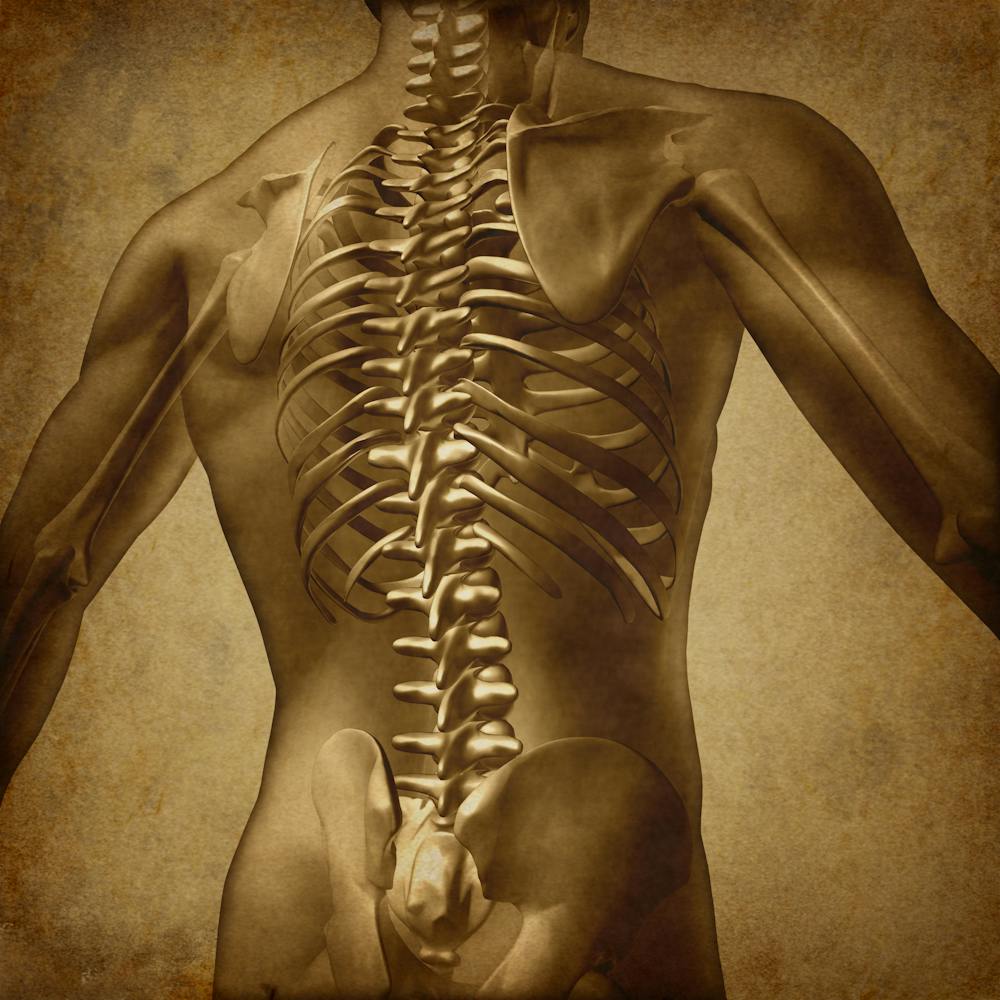
Rates of spinal surgery are on the rise, despite little evidence of effectiveness. from shutterstock.com
The greatest increase in the use of spinal fusion has been in older Australians, often in conjunction with decompression surgery for spinal stenosis – a condition that causes narrowing of the spinal canal (the cavity that runs through the spinal cord).
Differences in clinical training, professional opinion, and local practices are likely to play a role in such variations.
Evidence for spinal surgery
There is little high-quality evidence to support the use of spinal fusion for most back-related conditions, including spinal stenosis. And there is disagreement between surgeons on when spinal fusion surgery should be performed, not only for back pain but also for more acute conditions such as tumours and spine fractures.
There have also been no studies comparing spinal fusion to a placebo procedure. Most research to date compares one fusion technique to another technique or to a form of non-surgical treatment, so we still don’t know whether spine fusion is effective against placebo.
We also know that spine fusion surgery is expensive and associated with more complications than decompression surgery. And the surgery often fails. Around one in five patients who undergo spine fusion will have revision surgery within ten years.
Research also shows most patients having spine fusion surgery under workers’ compensation won’t return to the usual job, will still be having physiotherapy and be on opioid medication two years after surgery.
There are several factors, including an ageing population, that may contribute to the rapid increase in spinal fusion despite the lack of evidence supporting its use. Financial incentives might also explain the differences in rates between private and public sectors in Australia and between the United Kingdom and the United States.
We don’t have high-quality evidence on the benefits and harms of spinal fusion. This means there is uncertainty, which allows practitioners to continue doing the procedures they were trained to do unchallenged. This then leads to overtreatment, particularly where reimbursement rates are high, such as in the workers’ compensation setting.
Uncertainty about the appropriateness of spine fusion results in practice variation, wastes scarce health care resources and leads to worse patient outcomes.
We need better research in this area. This means research efforts should shift from studies looking at different ways of performing the surgery and focus on investigating whether or not it works better than non-operative treatments or a placebo, and, if so, whether the benefits outweigh the harms.
At Dynamic Body Technology, we are passionate about the world of movement. We want to help you and your organisations to see the health benefits related to movement.
What’s the most transformative thing that you can do for your brain today? Exercise! says neuroscientist Wendy Suzuki. Get inspired to go to the gym as Suzuki discusses the science of how working out boosts your mood and memory — and protects your brain against neurodegenerative diseases like Alzheimer’s.
Watched over 4.8m times since February 2018, this is one TEDx talk not to be missed:
In Episode 13 of the 21st Century Physio Podcast, the team talks to Marijn Kortekaas from Physitrack.
In this episode, the team discuss:
– What he learnt from working at big companies like Nike and how it applies to the health industry
– How technology helps build better patient experiences
– How you can better serve your patients and get better results
– How to get your team on board with using new technology
– The top 4 ways to bring your practice into the 21st Century
To find out more about Marijn and Physitrack, head to www.physitrack.com